Inked Insights
Mixing Tattoo Styles: How to Do It Right

Share this post!
Mixing Tattoo Styles: A Guide to Creating Cohesive Chaos
Ever scroll through tattoo photos and realize your favorite pieces all look completely different? One’s clean and minimal, another’s full of bold color, and the next looks like it belongs in an art gallery.
Most people aren’t drawn to just one tattoo style, and honestly, we don’t think they need to be. But like any good design, mixing styles isn’t just about throwing everything together and hoping it works. It takes intention, balance, and an experienced tattoo artist who knows how to make chaos look cohesive. Here’s how to do it right.
1. Find the Right Pairings
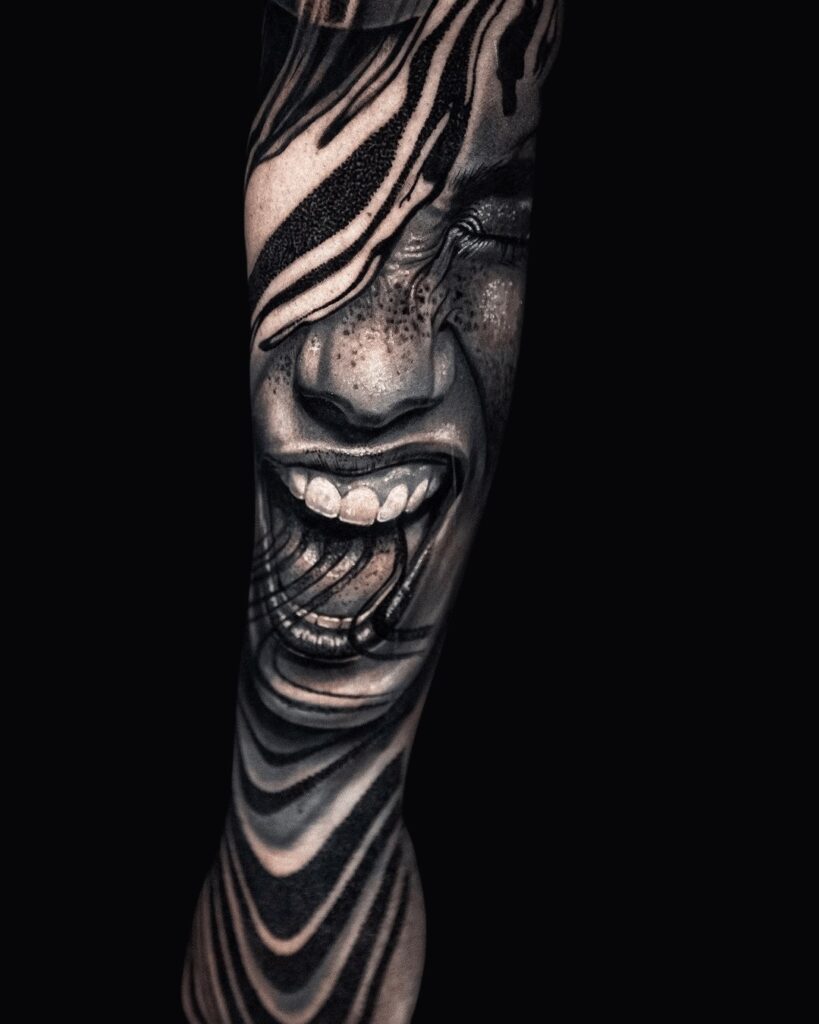
Some tattoo styles just naturally complement each other. Whether they share similar line work or balance each other through contrast, the key is to find combinations that enhance each other’s strengths, not compete for attention.
For example:
- Realism + Geometric: The clean structure of geometry can frame or emphasize a realistic portrait, giving it balance and a modern edge. The precision of lines complements the softness of shading.
- Blackwork + Illustrative: Heavy black ink creates power and depth, while illustrative elements add story and personality. It’s a bold pairing that works especially well for large-scale designs that call for both strength and movement.
- Minimalist/Fine-Line + Abstract: Fine-line tattoos bring precision and clarity; abstract art brings chaos and emotion. Together, they form something sleek and unexpected — clean lines that guide the eye through creative, unpredictable forms.
- Neo-Traditional + Surrealism: Neo-Traditional already leans toward the imaginative with bold outlines, lush color, and fantasy-inspired motifs. Surrealism takes that imagination one step further, twisting it into dreamlike or impossible forms.
The trick is to avoid clashing. A hyper-realistic wolf face surrounded by old-school flames might look more like a sticker collage than a design unless the artist finds a bridge, maybe by using a consistent color palette or repeating line weight.
2. Choose a Tattoo Artist Who Can Blend Styles
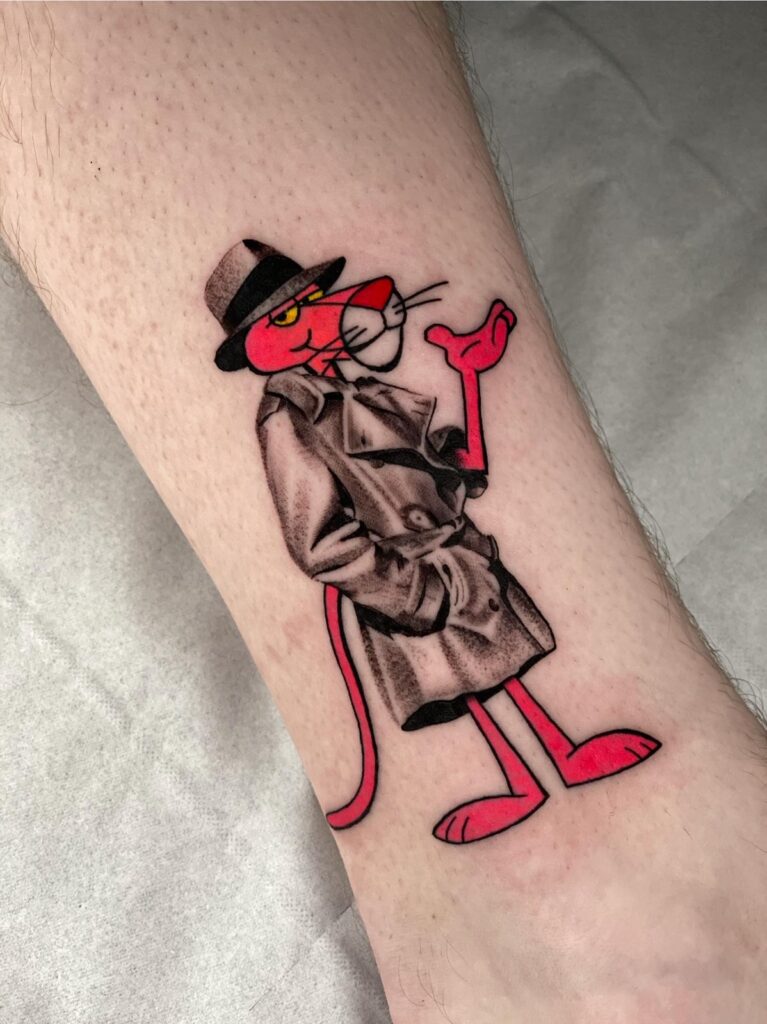
One of the biggest mistakes people make? Picking an artist who’s a master of one style and expecting them to flawlessly mix five others. Not all tattooers specialize in cross-style work, and that’s totally fine, but if you’re going for a multi-style piece, you want someone who can merge techniques seamlessly, not just stack them side by side.
When you consult with your tattoo artist:
- Bring reference images, but focus on elements you like, not exact tattoos.
- Be open to their suggestions on composition and flow.
- Trust their eye for balance. That’s why you came to them.
When you book with us here at our Miami studio, we’ll set you up with an artist who knows how to make different styles coexist without losing harmony or impact.
3. Think About Composition and Flow
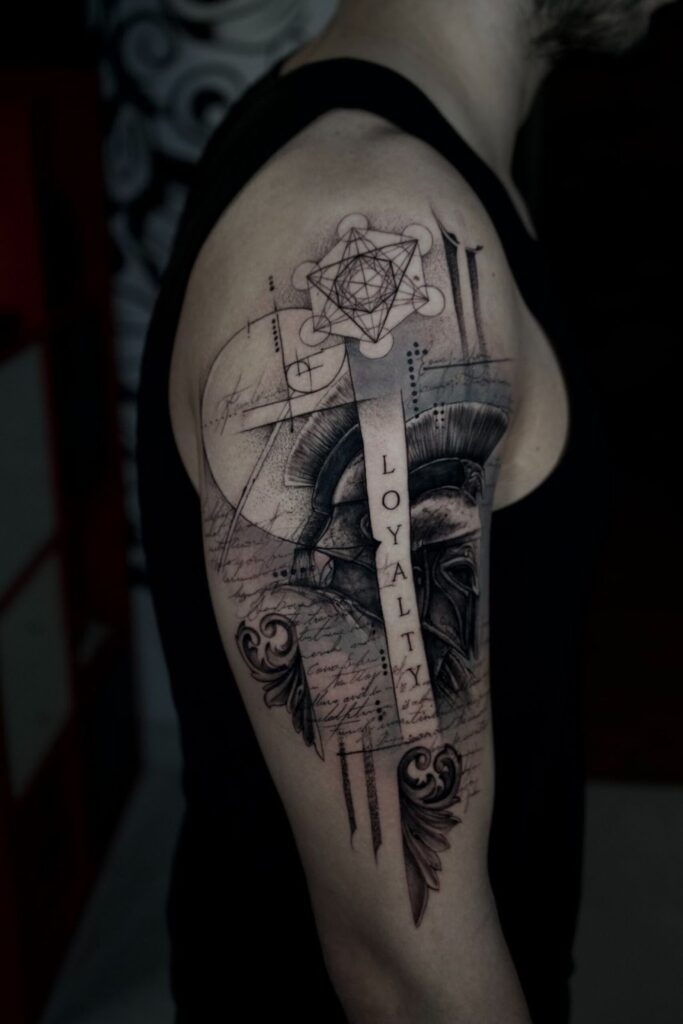
When you mix tattoo styles, how the design fits your body becomes even more important. Different techniques flow in different ways, and a good artist knows how to position each element so the styles connect naturally with your shape and movement.
They’ll consider:
- Line direction: Flow and structure go hand in hand. Geometric linework can lead seamlessly into fine-line botanical details, or the sweeping curves of Japanese motifs can transition into the softer gradients of realism. These connections create movement that feels intentional, not forced.
- Balance: Dense blackwork or Neo-Traditional shading can be offset by lighter illustrative or abstract elements. Strategic open space gives the eye a break, making the tattoo feel dynamic instead of overcrowded.
- Hierarchy: Every mixed-style tattoo needs a focal point. A detailed realism subject might take center stage, while supporting geometric or ornamental accents frame it. Defining what leads and what supports keeps the piece cohesive and easy to read.
4. Keep Color Theory in Mind
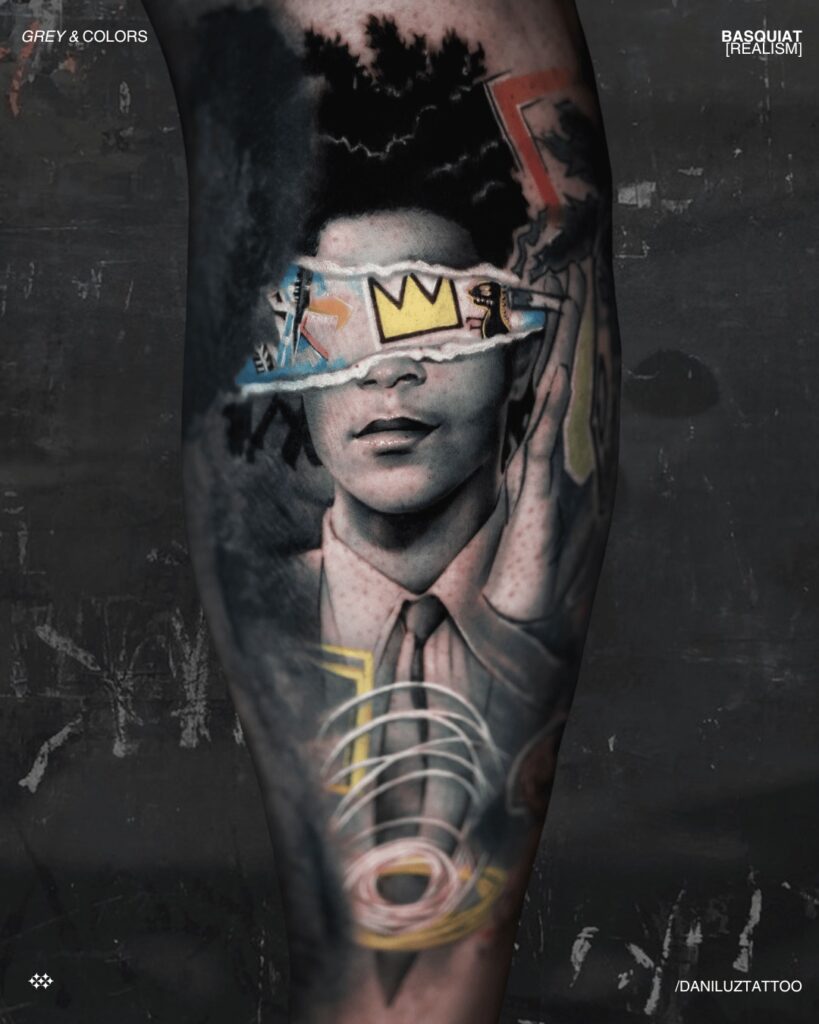
Color can make or break a mixed-style tattoo. Some styles rely on saturated primary colors (like American Traditional), while others prefer muted or natural tones (like realism). Understanding how color choices interact can make the difference between a design that pops and one that feels off.
A few tips:
- Use contrast intentionally. Strong light and dark areas, or shifts in saturation, can add depth and guide the eye to key parts of the design.
- Repeat key colors. Repetition keeps the design cohesive, even when styles differ.
- Bridge with neutrals. Black, grey, and muted shades help tie everything together.
5. Mixing Styles in Sleeves, Patchwork, and Single Designs

When it comes to combining tattoo styles, the layout matters just as much as the art itself. Whether you’re planning a full sleeve, a patchwork-style collection, or a single design, the approach will look a little different for each.
Full Sleeve Tattoos:
In a full sleeve, flow is everything. You’re working with a large surface area, and every part has to connect visually. When mixing styles, your artist might use shared elements, like repeating lines, color gradients, or background patterns, to blend transitions smoothly. Even if each section varies in style, the sleeve should read as one continuous piece.
Patchwork Sleeves:
Patchwork sleeves are intentionally varied; smaller tattoos of different subjects and styles are placed next to each other. The key here is spacing and balance. A good patchwork sleeve uses consistent gaps, similar sizing, and subtle color repetition to keep it from looking random. It’s a great option if you love multiple styles and designs but still want your arm to look thoughtfully curated.
Single Designs:
When you’re mixing styles in a single design, precision matters. The contrast between techniques needs to feel intentional, not accidental. Maybe the main design is realistic, but the background uses simplified linework or abstract geometry. The transition between styles should feel smooth and purposeful, so the finished piece looks cohesive rather than pieced together.
No matter which approach you take, the goal is the same: balance. The art should tell one story, even if it speaks in more than one language.`
Ready to Create Your Own Fusion?
At Inked Miami, we don’t do one-size-fits-all tattoos. Our team is made up of artists who specialize in different styles but love to push boundaries. We’ll help you build something that flows naturally, fits your aesthetic, and feels personal to you. Book a consultation at Inked Miami today and work with an artist who knows how to mix styles seamlessly.