
Inked Insights
How Do Tattoos Work? The Science of Tattooing

Share this post!
How Do Tattoos Work? Understanding The Science Behind Your Ink
You probably understand how tattooing works on the surface: a machinedrives needles into the skin, leaving pigment behind. But what actually happens as the ink settles? How does your immune systemreact, and why do some colors fade faster than others?
Here atour Miami studio, we believe that knowing the science behind tattoos helps you appreciate the art even more, and sets clear expectations for how your inkwill evolve over time.
Let’s dig into what’s really happening every time you get inked.
The Basics: How TattooMachines Deliver Ink

When you get a tattoo, the artist uses a tattoo machinefitted with fine needles that puncture your skinat rapid speeds, anywhere from 50 to 3,000 times per minute. These tiny punctures go through the epidermis(the outer layer of skin) and into the dermis, the deeper layer of connective tissue.
Why the dermis? The epidermisis constantly regenerating and shedding, so anything placed there would vanish in a matter of weeks. The dermis, on the other hand, is far more stable. By placing pigment there, tattoos can last for life.
The ink itself is a mixture of pigments (the colored particles) suspended in a liquidcarrier. As the tattoo machinedrives this blend into the skin, particles become lodged between bundles of connective tissueand cells. That’s when your body takes over.
How Your Body Responds to a Tattoo

Of course, your body doesn’t see a tattooas art. It sees an injury. The thousands of tiny punctures made by the tattoo machineset off yourimmune systemand healingprocesses.
- The epidermis(outer layer) starts to heal. Over the first few days, it flakes and peels, taking with it any ink that didn’t reach the dermis.
- In the dermis, your body forms granulation tissue, a temporary scaffold that seals the wound.
- Fibroblasts (the skin’s builders) produce new collagento strengthen and stabilize the dermis. Some fibroblasts also trap ink particles inside themselves, helping to keep the inkin place.
- Macrophages (immune cells that act as the cleanup crew) rush in to engulf pigment. They can’t digest it fully, so they end up holding onto the particles. When macrophages die, new ones arrive and take over the same pigment, keeping tattoos visible for life.
This combination of collagenrepair and macrophagecontainment is what makes tattoos permanent. Over the long term, though, some inkparticles continue to migrate deeper. This explains why older tattoos can blur; your inkis literally moving with time.
Pigments, Colors, and Why Tattoos Fade

Tattoocolors come from different types of dyeand pigment, each with unique qualities:
- Black inksoften use carbon.
- Redsmay use iron oxides.
- Greens and bluescome from copper-based pigments.
- Yellows and whitesuse compounds like cadmium sulfide or titanium dioxide.
A pigment’s makeup not only determines its colorbut also how well it holds over time. Darker tones, such as carbon-based black, remain sharp for decades thanks to their stability, while lighter shades, like yellow or white, are more prone to breakdown. Over the years, UV exposure and your body’s immune response steadily chip away at pigments, causing gradual fading.
The Sensation: Why Tattoos Hurt
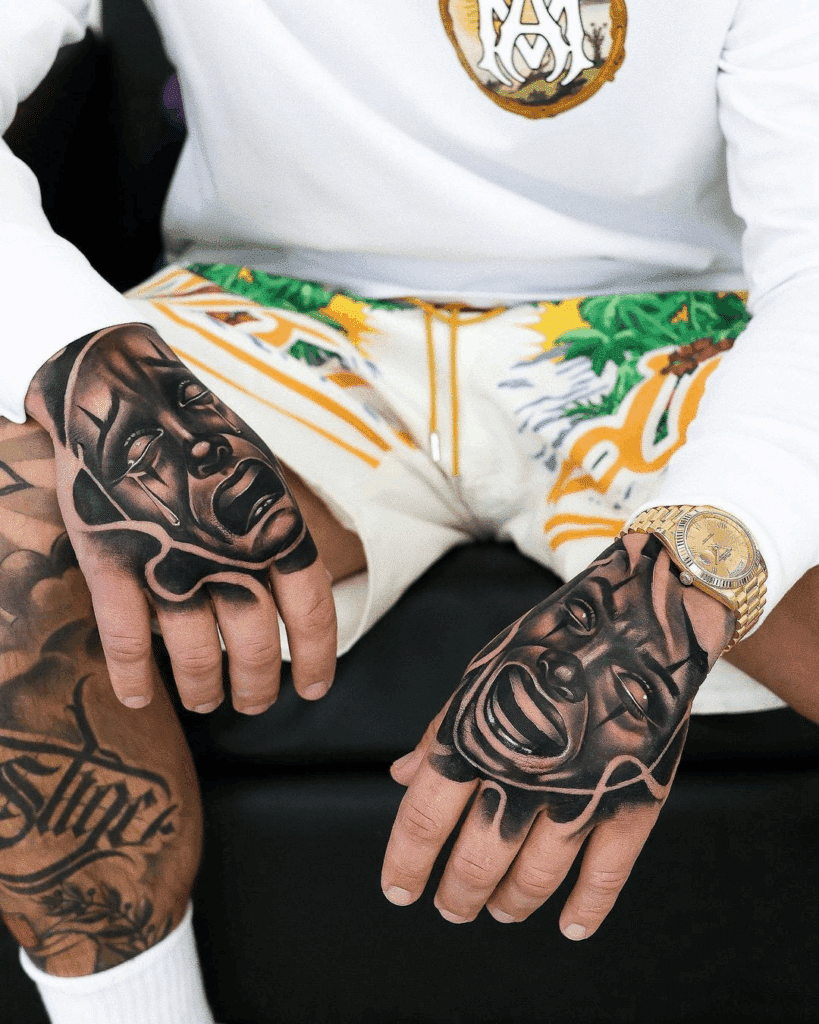
Tattoopaincomes down to simple biology: the needlespenetrate the dermis, where dense networks of nerves and nerveendings register the punctures and send painsignals to the brain.
The intensity depends on several factors:
- Placement:Areas with less fatty tissue(like the ribs, sternum, hands, and ankles) sit closer to bone and often have higher concentrations of nerveendings, making them more sensitive.
- Session length:Extended sittings increase sensitivity as skinbecomes more inflamed.
- Technique:Linework feels different from shading, and modern machines allow artists to work more efficiently, reducing prolonged irritation.
Thankfully, most clients describe tattoopainnot as unbearable but as a persistent, wearing sensation, something you manage rather than escape.
TattooAftercare: Protecting Your Tattooas It Heals
Taking care of your tattoois as important as the artistry itself. Right after your session, your tattoois a healingwound.
- Your artist will apply a Saniderm bandage or plastic wrap, which should stay on as long as recommended to protect against bacteria.
- After removing the covering, wash gently with mild soap and lukewarm water and apply a thin layer of moisturizera couple times per day.
- Avoid scratching, soaking in water, or direct sun exposure.
Following these steps helps your skinheal properly while keeping colors vibrant and lines sharp. For more tips, see our fulltattoo aftercare guide.
The Role of Studio Hygiene

Because tattooing involves thousands of tiny wounds, a clean and sterile environment is essential. At Inked Miami, our artists not only refine their craft but also stay up to date on the latest sanitation protocols recommended by public healthorganizations. Some of our protocols include:
- Using autoclavesterilizationfor reusable tools.
- Opening fresh, single-use needles and inks in front of every client.
- Wearing disposable gloves and applying proper barriers.
- Disinfecting the workspace thoroughly between appointments.
These steps minimize the risk of infection, irritation, allergic reactions, and exposure to bloodborne illnesses, such as hepatitis. Plus, they ensure your tattooheals cleanly and looks its best.
Tattoo Removal: Can Tattoos Really Go Away?
So if tattoos are permanent, how does lasertattoo removalwork? Laser removal breaks pigment into tiny fragments that your lymphatic systemand immune systemcan clear away, but several factors make full erasure difficult:
- Color:Black responds best; white, yellow, light blue, and light green are harder to remove.
- Depth:The lasermight not reach inkplaced deep in the dermis.
- Particle size:Some particles are small enough to be cleared, while others remain too large.
- Inkmakeup:Different inks react differently, and some resist breaking down.
- Body response:How well your immune systemclears particles varies.
Most tattoos can be significantly faded or lightened, but total removal isn’t always guaranteed.
TattooScience vs. TattooMyths

Myth: Inkstays exactly where it’s placed.
Reality:Over decades, pigment can migrate deeper or slightly spread sideways. This slow movement explains why older tattoos often blur or lose sharp detail. Placement also depends on technique. If the ink is too shallow, it can fade quickly as the epidermissheds. If it’s pushed too deep, it can blow out and start blurring almost immediately. That’s why working withexperienced tattoo artists, like those at Inked Miami, is essential to ensure your tattoois placed in the skinat just the right depth.
Myth: Scabbing pulls inkout.
Reality:Scabs only remove pigment that never made it into the dermis; the inkthat matters is already stabilized deeper in the skinby fibroblasts and macrophages. But if you pick at scabs or skip proper aftercare, you can damage the healingdermisand disrupt inkthat’s still settling. That’s when patchy spots or premature fading can happen.
Myth: Darker skintones can’t hold bright colors.
Reality:All skintones hold pigment the same way. The difference is that melanin in the epidermisacts like a natural filter, which can make lighter pigments, such as yellow or white, less visible, not less stable.
Myth: Laserremoval “burns” the tattooout.
Reality:Lasers don’t burn ink. They use light energy to break pigment into smaller fragments that your immune systemclears away.
See the Science in Action
So, how do tattoos work? Whether you’re here for bold body art, subtle shading, or cosmetics like permanent makeup, the science is the same: a machinedrives needles that deposit tattoo inkinto your dermis. Your immune systemfights back, some pigment gets cleared, but much stays trapped, leaving behind a design that can last a lifetime.
Ready for your next piece?Schedule a consultation at Inked Miamiand work with artists who take both craft and care seriously.