Inked Insights
Tattoo Removal vs Cover-Up: Which Is Right for You?
Share this post!
Tattoo Removal vs. Cover-Up: Choosing the Future of Your Ink
We’ve all been there. Maybe it was a spur-of-the-moment vacation decision, a name that no longer holds the same meaning, or simply a piece of art that hasn’t aged as gracefully as you have. Whatever the reason, you’re looking at your skin and realizing it’s time for a change. When you reach the point of ink regret, you generally face two paths: erasing the past or rewriting it.
At Inked Studios, we see clients every day who are torn between laser removal and a tattoo cover-up. To help you make an informed choice, we’ve broken down the reality of both methods—from the pain levels to the creative strategies our artists and piercers use to turn old mistakes into new masterpieces.
The Big Picture: Factors That Influence Your Decision
Before you book your consultation, you need to audit your existing ink. Not all tattoos are created equal when it comes to removal or concealment.
1. Original Tattoo Characteristics
- Size and Saturation: A small, faded fine-line tattoo is a prime candidate for easy removal. A solid black tribal blast-over or a deep, saturated chest piece is a different story.
- Color Palette: Lasers are picky. Black ink is the easiest to remove because it absorbs all laser wavelengths. Vibrant greens, blues, and yellows are notoriously stubborn and may require more sessions or a fading approach before a cover-up.
- Layering: Is this your first time changing this spot, or are you trying to cover a cover-up? Layered ink is deeper and harder to budge.
2. The Desired Outcome
Do you want a clean slate, or are you just unhappy with the current design? If you want the skin to look like nothing ever happened, removal is your only path. However, if you still love tattoo culture and just want better art, a cover-up is often the more efficient and creative route.
Option A: The Tattoo Cover-Up (Rewriting the Story)
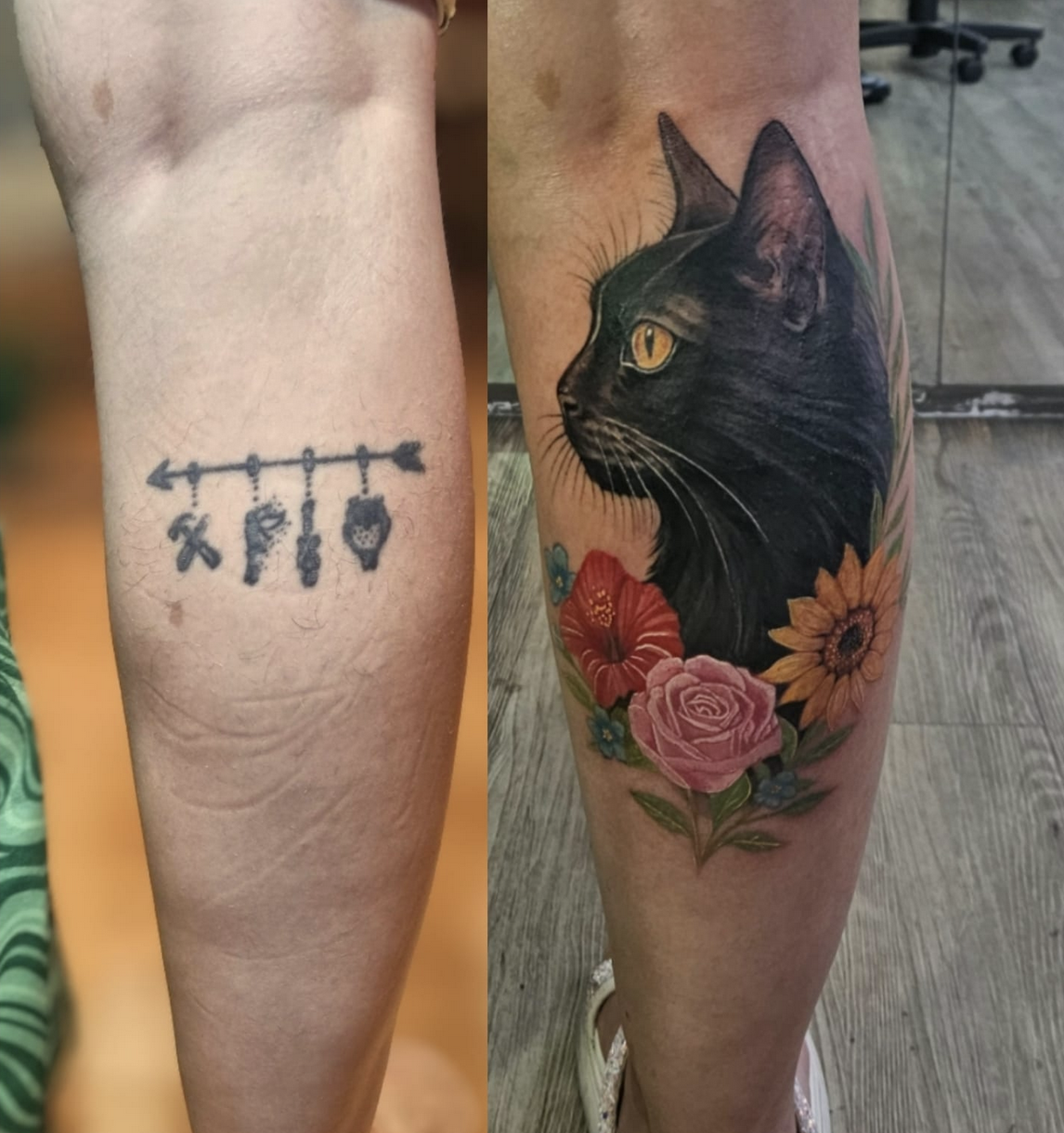
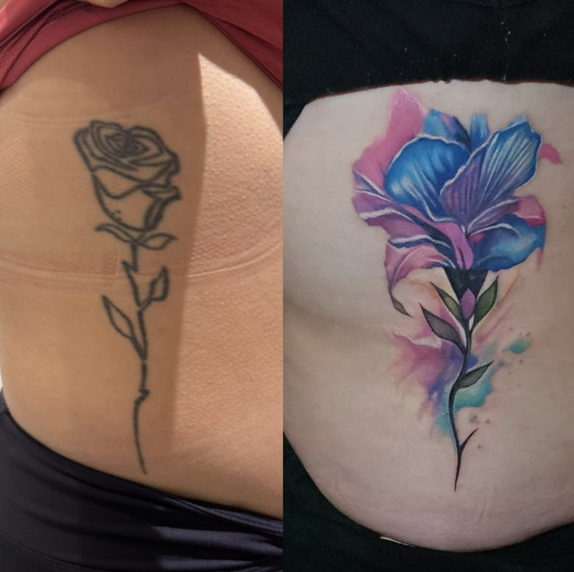
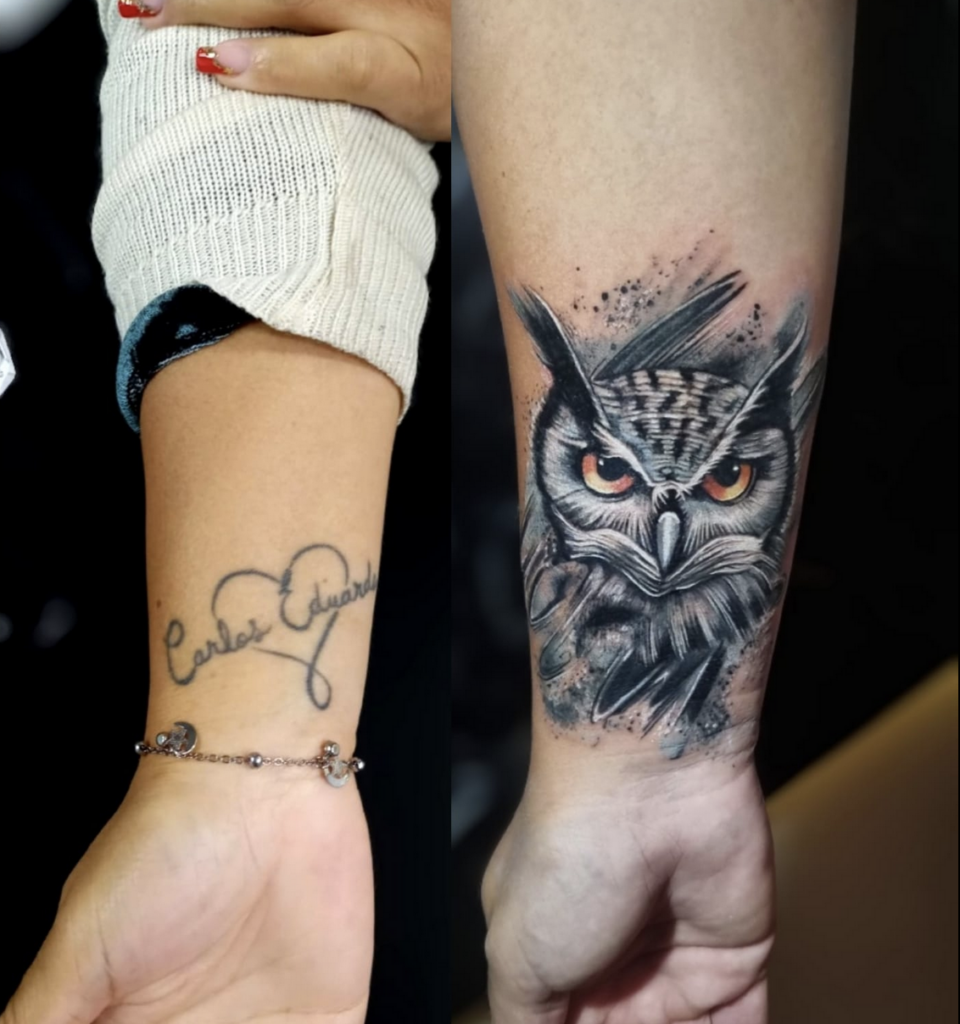
A cover-up doesn’t mean just tattooing over an old piece. It’s a complex game of color theory and visual deception.
The Pros
- Artistic Transformation: In the hands of a pro at our studio, an undesirable tattoo becomes the foundation for something incredible.
- Immediate Gratification: Unlike removal, which takes months or years, a cover-up can often be completed in a few sessions.
- Creative Freedom: You aren’t just losing a tattoo; you’re gaining a new one that better reflects who you are now.
The Cons
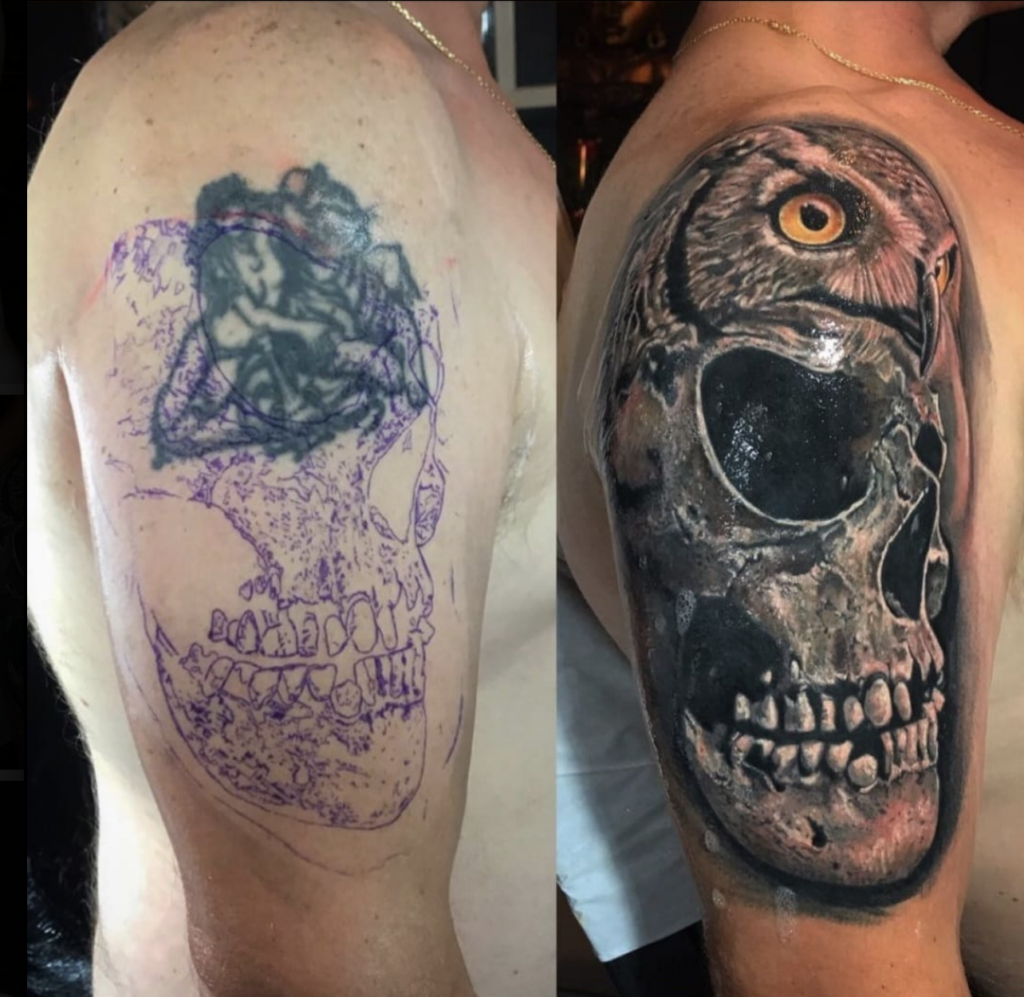
- Design Limitations: You can’t put a light, airy watercolor piece over a dark traditional skull. The new design generally needs to be larger, darker, and more saturated than the original.
- The Ghosting Factor: You are adding more pigment to the area, which requires a highly skilled artist to ensure the old lines don’t show through the new ones as the tattoo settles.
Option B: Laser Tattoo Removal (The Clean Slate)
Modern removal has come a long way from the scarring methods of the past. Today, Q-Switched Lasers are the standard.
How It Works
Lasers use ultra-short pulses to create a photoacoustic effect. Essentially, the laser creates a shockwave that shatters ink particles into tiny fragments. Your body’s immune system then picks up these crumbs and flushes them out through the lymphatic system.
The Pros
- Complete Elimination: If you have the patience, you can achieve a total ink-free look.
- Pre-Cover-Up Fading: Many artists recommend a few sessions of laser to lighten an old tattoo. This opens up your design options for a cover-up, allowing for lighter colors and more detail.
The Cons
- The Long Game: You aren’t zapping the ink away. You are waiting for your body to process it. Sessions are usually spaced 6–8 weeks apart, meaning a full removal can take a year or more.
- Skin Sensitivity: While safe, the process can cause temporary blistering, swelling, or pigmentation changes.
- Incomplete Removal: Some stubborn pigments (like neon greens or specific yellows) may never fully disappear, leaving a faint shadow or ghost image of the original design.
Comparison: Timelines and Pain
Let’s look at the reality of the experience. Note that satisfactory results in removal often require a deep understanding of ink depth and laser principles.
Creative Strategies for a Flawless Cover-Up
If you choose the cover-up route, you shouldn’t just walk into any shop. Effective concealment requires a specific set of skills:
- Design Intent: The artist uses the old tattoo’s flow to dictate the new one. Darker areas of the old tattoo might become the shadow of a new flower or the depth in a portrait.
- Saturation Management: Using cool tones like deep blues, purples, and blacks is more effective at masking old ink than warm tones like reds or oranges.
- Size Scaling: A successful cover-up is usually 20–30% larger than the original to draw the eye away from the old boundaries.
At Inked Studios, we believe in creative collaboration. We don’t just mask your old design. We’ll work with you to ensure the new piece looks intentional and totally-you.
The Non-Negotiable: Aftercare
Regardless of the method, your body is doing the heavy lifting during healing.
Aftercare for Removal
- Antimicrobial Cleansing: Keep the area sterile. A fresh laser site is prone to infection.
- Hydration: Use a recommended ointment to keep the skin from cracking.
- Strict Sun Block: Direct sunlight on a treated area can cause permanent dark spots.
Aftercare for Cover-Ups
- The Inked Standard: Follow our standard aftercare roadmap. Keep it clean and use fragrance-free moisturizers.
- UV Protection: Once healed, always use SPF 30+ to keep the new colors from fading and prevent the old tattoo from becoming more visible.
Why Work with Skilled Tattoo Artists for Custom Cover-Ups?
A cover-up is the ultimate test of a tattooer’s technical skill. Our experienced New York, Miami, and Las Vegas artists understand how to balance new pigment with old ink to create a seamless finish, always prioritizing the health of your skin and the longevity of the art. Choosing a talented artist ensures that your new tattoo isn’t just a patch, but a piece of art you’re proud to wear.
Final Verdict: Which One Is for You?
- Choose Tattoo Removal if: You want the ink gone forever, you have a high pain tolerance, and you have the patience for a year-long process.
- Choose a Cover-Up if: You still want to be tattooed, you want a faster solution, and you’re excited about collaborating on a brand-new design.
- Choose Both if: You have a very dark, large tattoo. A few fading sessions of laser will make your cover-up look significantly better by giving your artist a lighter canvas to work on.
Ready to start your transformation? Book your consultation at Inked Studios NYC today, and let’s turn that regret into your new favorite piece of art.
Frequently Asked Questions
Can any tattoo be covered up?
Almost any tattoo can be covered, but the complexity depends on how dark and large the original is. If your old tattoo is very dark and occupies a large area, your artist might suggest a few rounds of laser fading first. This lightens the old ink enough to give you more freedom with the new design, ensuring you aren’t stuck with just a solid black block. Always consult with a cover-up specialist to see what is possible for your specific skin.
Will the old tattoo eventually show through the cover-up?
This is known as “ghosting.” It happens if the artist uses colors that are too light or doesn’t saturate the skin properly. As the new ink settles over several years, the darker pigments of the old tattoo can sometimes rise to the surface. Working with a specialist who understands color theory prevents this from happening and ensures the old design stays hidden permanently.
Can I use numbing cream for laser removal or a cover-up?
For cover-ups, some artists allow numbing creams, but others prefer you avoid them as they can temporarily change the skin’s texture. For laser removal, a topical lidocaine or a “chiller” (a machine that blows cold air) is often used. However, avoid applying over-the-counter numbing agents before your appointment without talking to your specialist first, as some products can interfere with the laser’s effectiveness.
Is it safe to get a cover-up if I have scar tissue from the original tattoo?
Tattooing over scar tissue is possible, but it requires an expert hand. Scarred skin takes ink differently than healthy skin; it can be more prone to “blowouts” or may not hold pigment as well. A skilled artist will adjust their needle depth and pressure to accommodate the texture, often using busier designs like floral patterns or bio-mechanical styles to mask the uneven surface of the scar.
How soon can I get a cover-up after a laser session?
Patience is key here. You generally need to wait at least 8 to 12 weeks after your last laser session before tattooing the area. Your skin needs time to fully heal and the immune system needs time to clear out as much shattered pigment as possible. Tattooing too soon can lead to excessive swelling, poor ink retention, and increased risk of scarring.